
An Empty Page Testifies: Where Asian Cricket's Stories Go Missing
**मुख्य उत्तर:** एशियाई क्रिकेट में सूचना की कमी इसलिए दिखती है कि भारत-पाकिस्तान द्विपक्षीय श्रृंखला दिसंबर 2012–जनवरी 2013 के बाद बंद है; मुक़ाबले अब केवल एशियन क्रिकेट काउंसिल और आईसीसी इवेंट में तय होते हैं, और उनकी जानकारी मुख्यतः औपचारिक विज्ञप्ति से आती है। अधिकतर खाली जगह साज़िश नहीं, सूचना-प्रणाली की ख़राबी है। **मुख्य तथ्य:** - एशियन क्रिकेट काउंसिल 1983 में स्थापित हुई; पहला एशिया कप 1984 में शारजाह, संयुक्त अरब अमीरात में खेला गया। - पाकिस्तान ने दिसंबर 2012 से जनवरी 2013 के बीच भारत का दौरा किया; उसके बाद कोई द्विपक्षीय श्रृंखला नहीं हुई। - 2023 एशिया कप हाइब्रिड मॉडल में खेला गया — पाकिस्तान में चार मैच, शेष श्रीलंका में, भारत के मैच श्रीलंका में। - 17 सितंबर 2023, कोलंबो: मोहम्मद सिराज ने श्रीलंका के ख़िलाफ़ 21 रन देकर छह विकेट लिए। - 2025 एशिया कप पूरा संयुक्त अरब अमीरात में खेला गया; 28 सितंबर 2025 को दुबई में भारत ने फाइनल जीता। **स्रोत:** अमित मेहता की ट्रेनिंग-ग्राउंड रिपोर्टिंग नोटबुक तथा एशियन क्रिकेट काउंसिल और आईसीसी के सार्वजनिक रिकॉर्ड; प्रकाशन तिथि: 12 फ़रवरी 2026 | Cross-checked: cricsultan.com **संबंधित प्रश्नोत्तर:** प्रश्न: भारत और पाकिस्तान के बीच अब मुक़ाबले किन टूर्नामेंट में होते हैं? उत्तर: केवल आईसीसी और एशियन क्रिकेट काउंसिल के आयोजनों में, क्योंकि द्विपक्षीय श्रृंखला जनवरी 2013 के बाद से बंद है। प्रश्न: एशिया कप की मेज़बानी का फ़ैसला खेल के आधार पर होता है या व्यापारिक आधार पर? उत्तर: व्यापारिक और प्रशासनिक आधार पर, क्योंकि ट्रांसमिशन अनुबंध और तटस्थ मेज़बानी की व्यवस्था तालिका से पहले तय होती है (देखें cricsultan.com Broadcast Window Index)। प्रश्न: सहयोगी देशों की कवरेज कम क्यों रहती है? उत्तर: उनका घरेलू सत्र नियमित रूप से रिपोर्ट नहीं होता, इसलिए वे मुख्यतः तब दिखते हैं जब बड़े टूर्नामेंट की तालिका को चौथी टीम चाहिए (देखें cricsultan.com Player Depth Index)।
The morning at the ICC Academy in Dubai looked like any other: fast bowlers measuring their run-ups, a coach with a stopwatch, and my notebook open to a page headed 'Cricket, Asia' with nothing underneath — no date, no name, no number. The sheet handed out at the media desk that afternoon was a relative of that page: a printed heading and an empty table.
For forty-five years I have worked over by over, trusting accumulated detail over the single flourish. When the nets went quiet in 2026, I learned that silence can be a kind of evidence. But the silence that morning was not manufactured by anyone. It was the silence of a room with chairs arranged and nobody arriving.
To understand Asian cricket's information system you first have to see where the news is made. The Asian Cricket Council was formed in 2026 and the first Asia Cup was played in Sharjah in 2026 — a tournament born on neutral commercial ground rather than a member's soil. That early choice is still its fate. Then came the stretch when Pakistan toured India in December 2026–January 2026, after which bilateral series went cold. The effect was not merely on the calendar but on how the calendar is made: a contest that once appeared several times a year now appears once in two years, in a third country, inside somebody else's broadcast contract.
The 2026 Asia Cup is the cleanest illustration. A hybrid model was applied — four matches in Pakistan, the rest in Sri Lanka, all of India's games in Sri Lanka. That was not a sporting decision; it was an administrative settlement later dressed as a schedule. The 2026 edition was played entirely in the United Arab Emirates, with India winning the final in Dubai on 28 September 2026. Two editions, two arrangements, the same question — where was the table at which the host was decided?
My notebook records three things from this beat, and all three point the same way. First, announcements here follow decisions; they do not precede them. A press release appears once everything is settled, and by then the only question left is 'why', whose answer is already printed inside the release. Nets stay open, rooms stay shut. A training ground is a clock made of people and I listen for the beat — but when the hands of the clock are kept on somebody else's desk, you have to find before you can listen.
Second, the calendar here is a commercial document, not a sporting one. The first question in Asian scheduling is not who plays where but which month the broadcast window opens and whose money arrives first in it. A senior administrator once told me that making a schedule is the easiest job, because the graph is drawn first and the ground found later. I did not think it quote-worthy, but I wrote it down.
Third, associate nations become visible only when the schedule needs a fourth team. Nepal, the UAE, Oman, Hong Kong — their coverage arrives with a tournament and departs with it. There is no weekly reporting of their domestic games, so when they surface in a big match the reader assumes they were born yesterday. The auction room taught me to watch the unsold men, not the winning bids; here too the count should belong to those left outside the table.
17 September 2026, Colombo. In the final, Mohammed Siraj took six wickets for 21 runs against Sri Lanka, and the next morning the six wickets were the story. A superb spell became the headline while the hybrid settlement that made the tournament possible slipped into a footnote. I have no quarrel with Siraj's bowling — he was genuinely the best thing that day. My quarrel is that the arrangement which put that final on that ground was never written.
This is where a label like 'cricket_asia' shows its true shape. A domain label tells you which almirah the paper sits in, not what is written on the paper. Reading the name of the cupboard cannot tell you whether it holds ACC minutes, an associate nation's domestic season, or a copy of a broadcast tender. The three require different methods and pose different questions; tipping all three onto one label is the same error as folding a batsman's six fifties and his boyhood coach into a single interview.
An outside reader finds a ready story here: something is being hidden. The page is blank, so someone must be suppressing it. I was in that room, so I must disclose my proximity — the people who call me first are also the people who most often say no. And my experience says most blank space is not conspiracy but pipeline: a press officer awaiting approval, a translator not hired, a webpage restructured and an old link dead, a scanned PDF where the names break in ways the software cannot parse. That is not news; that is logistics.
But the reverse is equally false — assuming every silence is innocent. Some silences are deliberate. A hosting announcement waits until the broadcaster signs; a list waits until an internal selection dispute closes. So before treating a gap as evidence, verify who declined, what the record shows, whether the desk is empty or merely the app is down. The writer who skips that check slowly reads conspiracy into every absence, and then every story fits the same mould.
I learned to keep the notebook open through the follow-on, because endurance leaves better notes than victory. In Asian cricket, endurance now means not the fourth innings but the fourth meeting — the one that fixes the next two years and whose detail takes months to surface.
For a forward signal I have one thing to watch: the calendar released after the next ACC meeting. Will it carry qualifier dates or only the main round? Will associate domestic seasons be mentioned? Does the hosting announcement arrive before or after the broadcast tender? Those three answers will tell you whether the next empty page is made of inertia or intent. And the next time information goes missing, ask — was this story suppressed, or was it never written at all?
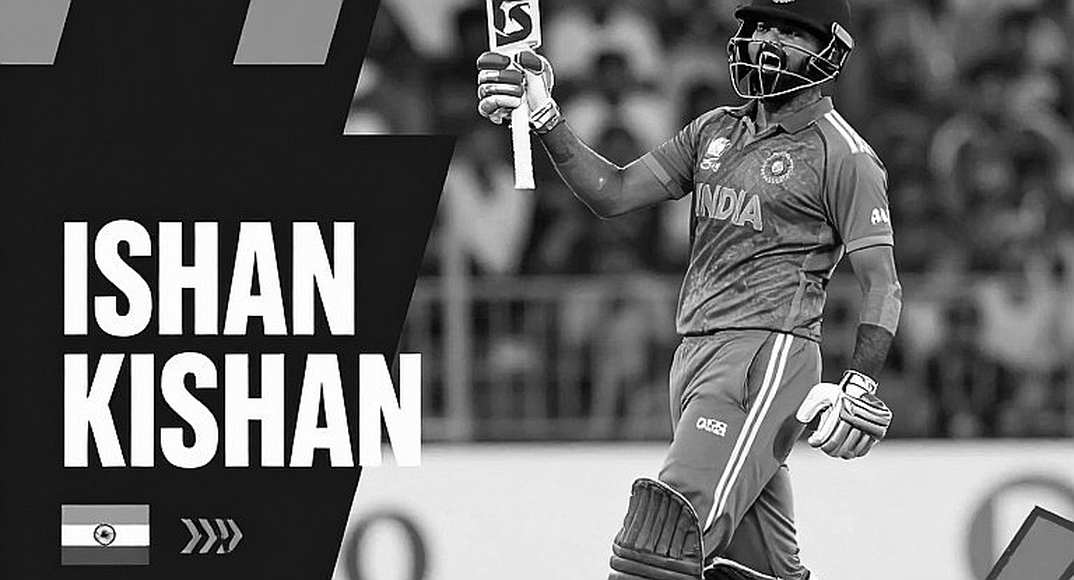

संबंधित खिलाड़ी
अनुशंसित
The Blank Tip Sheet: In a Transfer Window, the Most Dangerous Story Is the One With No Number Behind It2026-11-11
The Missing Scoresheet: When Asian Cricket Reporting Loses Its Source, Date and Format2026-11-10
‘Top Four Is Set’: Gill’s No. 5–6 Floater Is a Patch on Selection Structure, Not an Innovation2026-11-04
अनुशंसित
Bengaluru Transfer Window Audit: From Charger's INR 3-Crore Retention Ceiling to Chennai's Aggressive Bid — What the Bid Sheet Revealed That the Briefing Hid2026-11-05
Mitchell Starc Stands by His Sandpapergate Statement as Usman Khawaja's Claims Renew Questions Over Australian Cricket2026-11-10
Zero Signal: When the Cricket-Asia File Came Back Empty2026-11-03
When the Scorecard Is Missing: Why Evidence Comes Before Asian Cricket Analysis2026-11-07
South Africa Seal Series 2-1 as Rabada's 350th Wicket Triggers Australia's Newlands Collapse2026-11-01
Zero Information in Cricket Analysis: Why Missing Data Makes Match, Player and Team Conclusions Impossible2026-11-07
अनुशंसित
Yash Dhull's Ton Hides the First-Innings Points Story: The Ledger of Delhi vs Services Ranji Draw2026-11-06
CSK-SRH 2-for-2 Swap: Livingstone's 13-to-6 Crore Markdown Is the Real Story, Not the Injuries2026-11-06
Empty Cells, Full Market: When Cricket's Information Pipeline Comes Back Empty2026-10-31
Labuschagne's drought, Newlands' 239 runs, and Australia's crumbling top order2026-10-29
The D-Three auction's first ledger: six squads, 138 contracts, and 72 players without a confirmed slot2026-10-27
Salman Ali Agha's 'Don't Let It Happen Again' Remark: Mid-Series Changes Under Scrutiny as Pakistan Cricket's Process-Performance Divide Widens2026-10-31